Hotel Fire Safety for Night Staff and Design Teams
7 August 2026
Fire Curtain Maintenance: 9 Inspection Records
18 August 2026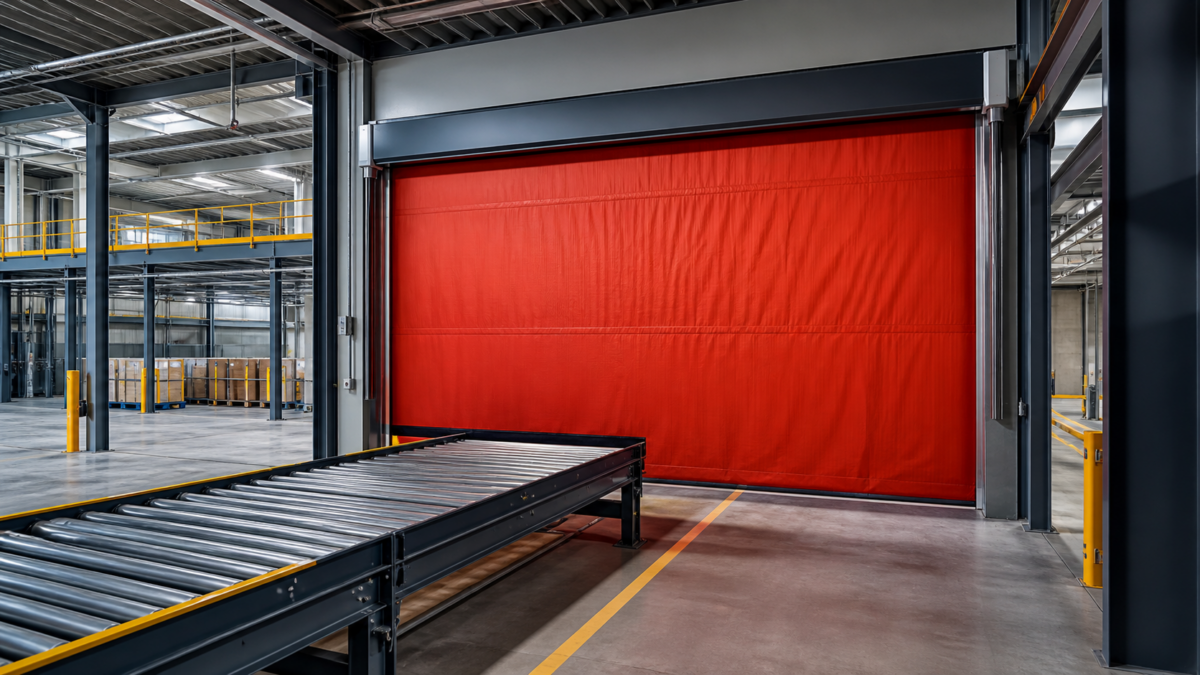
- Map hazards and production dependencies first
- Engineer conveyor and wide-opening interfaces
- Test the production scenario and manage change
- Write the interface around the actual production states
- Review the Opening With the Production Team
- Connect Every Opening to a Safe Process State
- Conveyor and Barrier Interface Checks
- Assumptions That Fail on a Working Line
- Official references and scope
- Frequently Asked Questions
Factory fire safety fails when the boundary exists on the plan but the production line never receives a safe alarm state. Conveyors, stock, process utilities and large openings must be designed into the scenario rather than treated as obstacles for the installer to solve.
Factory fire safety needs a workable sequence at every opening crossed by production equipment. Start with the line’s actual operating states, then coordinate the barrier and controls with the appointed designers.
Map hazards and production dependencies first
Separate production, raw-material storage, finished goods, utilities, battery areas, offices and loading zones according to the approved risk and fire strategy. Record combustible loads, process hazards, shift occupancy and shutdown constraints without substituting a generic building-type assumption for project analysis.
Trace escape, fire-fighting access, compartment lines and smoke zones alongside material flow. The objective is to identify where protection can interrupt normal operations and where the process must reach a defined safe state before a barrier deploys.
Engineer conveyor and wide-opening interfaces
For each conveyor, door or transfer opening, define the alarm response, stop sequence, clearance method, obstruction monitoring, responsibility and test method. A curtain cannot close a boundary if product or equipment remains in its path.
Coordinate steel movement, guide supports, head-box space, guards, cable routes and maintenance platforms. Verify that the proposed assembly and classification evidence cover the actual size, mounting conditions and components.
Test the production scenario and manage change
Integrated acceptance should initiate the relevant alarm and observe process shutdown, barrier movement, final-position feedback and connected fire or smoke-control responses. Record deviations against the opening and production-line references.
Factories change continuously. New racking, machines, cabling and shifts can alter access, hazards and deployment paths, so management of change must trigger a fire-strategy and barrier-interface review before installation.
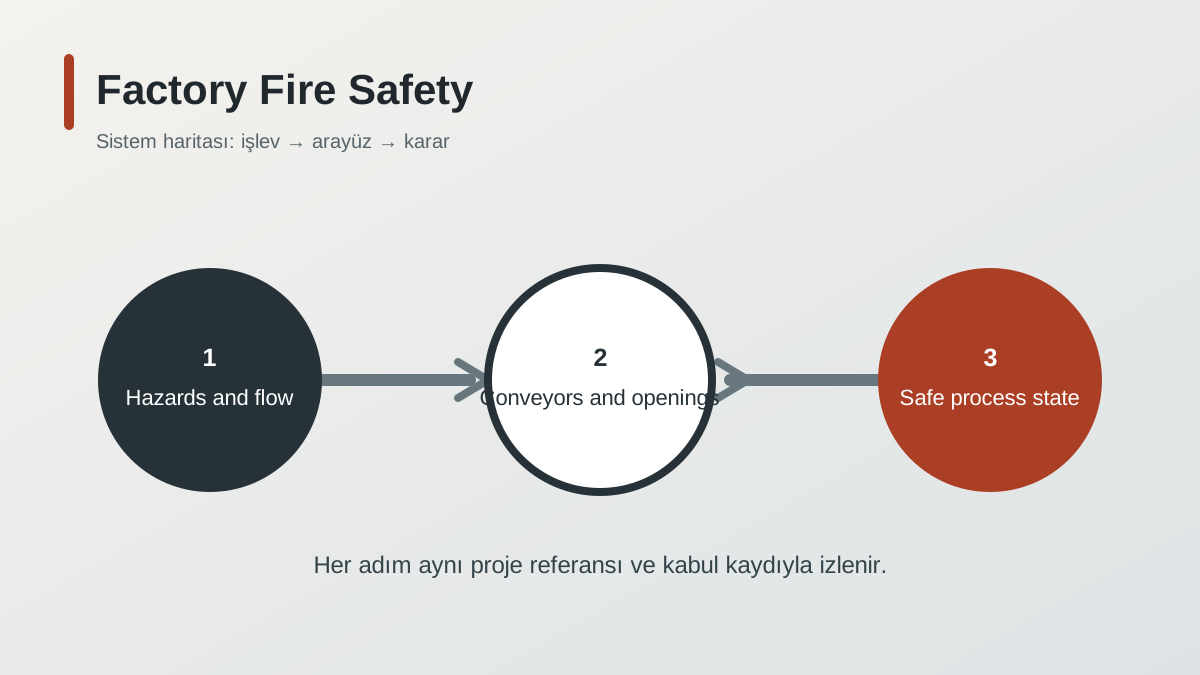
Write the interface around the actual production states
“Stop conveyor on fire” does not describe the condition at the protected opening. A line can be empty, carrying material, backed up from downstream equipment or stopped with a load across the boundary. Review those states with the process engineer and the fire-safety team. The approved response must address the relevant condition; the curtain installer cannot decide the production shutdown strategy from an electrical contact alone.
For an illustrative interface workshop, sketch a conveyor carrying cartons through a partition. Show the detection input, the line controller, the opening and the equipment on either side. Ask what happens if a carton remains in the opening when the signal arrives. Do not assume that delaying the barrier or allowing the line to run on is acceptable. Those choices need an engineered response consistent with the fire objective, machinery safety and product arrangement.
Define what each signal means. A controller reporting “stop commanded” is not the same as proving that equipment has reached a particular safe state. Likewise, a curtain command does not confirm that the barrier reached its required position. The project team should agree which conditions are monitored, where indications appear and what action follows an exception. This is a functional requirement to resolve, not a wiring design supplied by this article.
Include restart in the review. Restoration after a planned test or an incident can involve several system owners. The procedure should identify who checks the affected area, confirms the relevant systems are available and authorises the return to normal operation under the site’s approved arrangements. A production restart must not rely on a temporary bypass left in place to finish a test.
Look beyond the conveyor itself. Forklift routes, guards, maintenance platforms, pallets and temporary stock can occupy the approach to the opening. Inspect the normal working layout and material-handling practice, including busy periods, rather than reviewing only a cleared installation photograph. If the operating arrangement routinely obstructs the protective function, the issue needs a process or layout change.
Use management of change when machinery, line speed, product dimensions or control software is altered. Identify the barrier interface in the proposed work and arrange the necessary technical review and verification before accepting the new production condition. The original commissioning result describes the earlier arrangement; it cannot by itself establish that a changed sequence remains appropriate.
Review the Opening With the Production Team
Map hazards, occupants and material flow; define boundaries; schedule wide openings; engineer conveyor shutdown; coordinate structure and services; confirm evidence; provide safe access; run integrated tests; and control later production changes.
Connect Every Opening to a Safe Process State
Put the process response and barrier action in the same cause-and-effect. See fire-curtain systems, the product range and technical support.
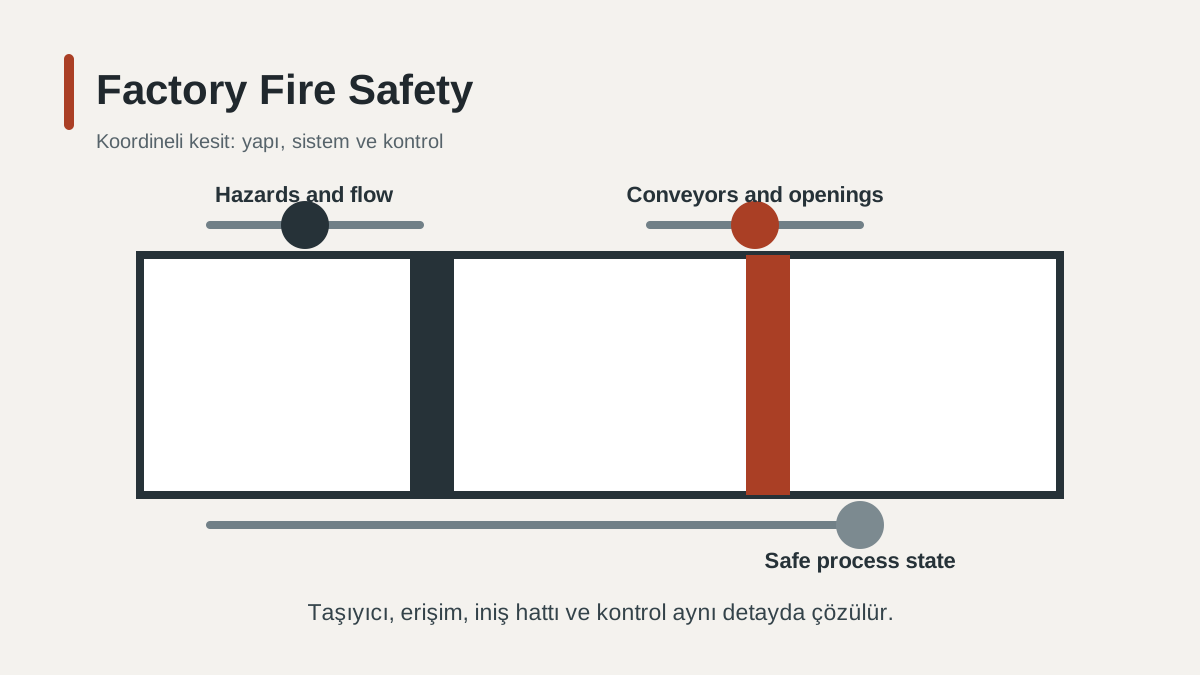
Conveyor and Barrier Interface Checks
- Map hazards and different operational zones.
- Define the protected boundary and opening function.
- Assign conveyor stop and clearance responsibility.
- Coordinate structure, services and maintenance access.
- Match evidence to size and mounting conditions.
- Test and record the integrated production scenario.
Assumptions That Fail on a Working Line
Designing around clear width alone
Process equipment, support, guides and access define the real opening.
Assuming the conveyor will be clear
The safe-state sequence needs an engineered and testable interface.
Allowing undocumented production changes
New equipment can obstruct or invalidate the approved arrangement.
Official references and scope
This England guidance addresses risk assessment in factories and warehouses. It does not replace the project’s machinery-safety assessment, process design or curtain evidence. See UK Government: factories and warehouses.
Frequently Asked Questions
Is stopping a conveyor enough to clear a fire curtain?
No. A stopped load can remain across the opening. The process and fire-safety designers need an approved response for the actual line states and obstruction conditions.
Who defines the conveyor and curtain interface?
The appointed project team must coordinate process, machinery-safety, fire-control and curtain responsibilities. The interface should have clear owners, required responses and a verification method.
Does a change in line speed require review?
Review any production change that affects the assumptions behind the protective sequence, including timing, load position, opening clearance or control logic.
Why include restart in the commissioning plan?
Restoration involves checking affected systems and removing test conditions or temporary bypasses. The approved procedure should identify who confirms availability and authorises normal operation.
Share the plans, opening schedule, required performance, sections and cause-and-effect. IMFire can review the interfaces and prepare a project-specific proposal.