Factory Fire Safety: 9 Production-Line Checks
7 August 2026
Mixed-Use Fire Barriers: Follow the Boundary
25 August 2026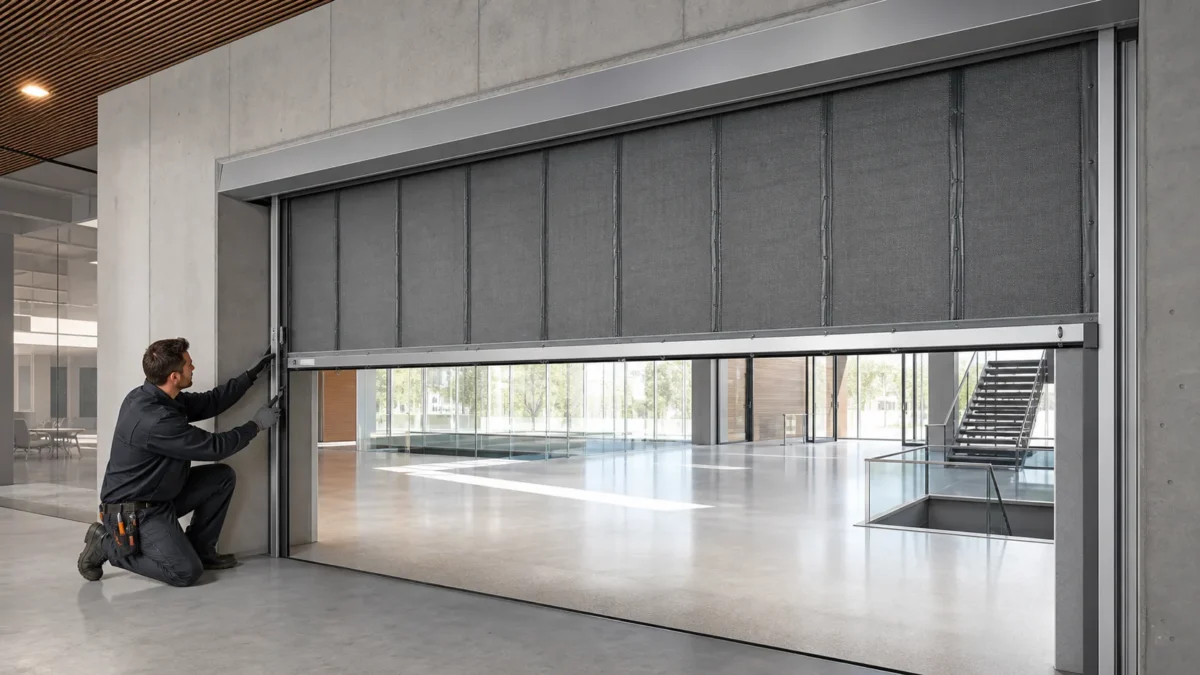
- Treat maintenance as evidence of the complete safety function
- Build a baseline before setting the maintenance plan
- Keep nine inspection records for every fire curtain
- Separate observation, functional testing and integrated testing
- Coordinate alarm, power and building interfaces
- Control defects and building changes until they are closed
- The Minimum Maintenance Record Pack
- Make the Next Inspection Comparable, Not Merely Repeatable
- Fire Curtain Maintenance Record Checklist
- Fire Curtain Maintenance Traps
- Current References for Fire Curtain Maintenance
- Frequently Asked Questions
A fire curtain that moves is not automatically a fire curtain that remains ready for its approved role. Useful maintenance proves nine connected records: what was installed, what changed, what was inspected, what was tested and how every defect was closed.
This guide develops the project-inspection source into an international maintenance workflow for active fire curtain assemblies. It deliberately avoids a universal service interval: the adopted requirements, current product documentation, fire strategy, risk assessment, usage and local approval route must define the competent maintenance plan for each building.
Treat maintenance as evidence of the complete safety function
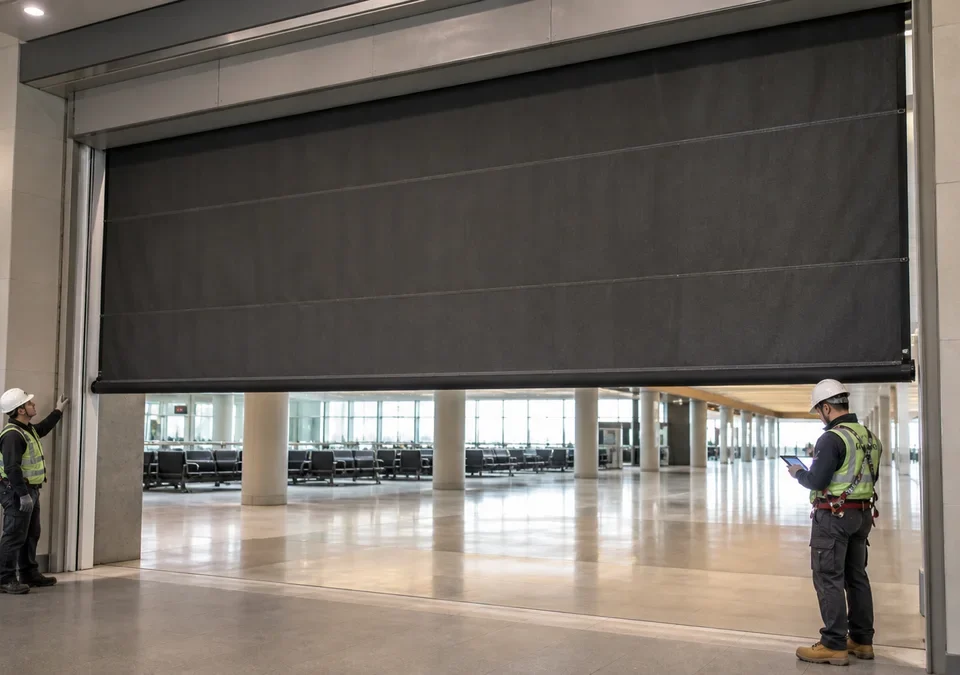
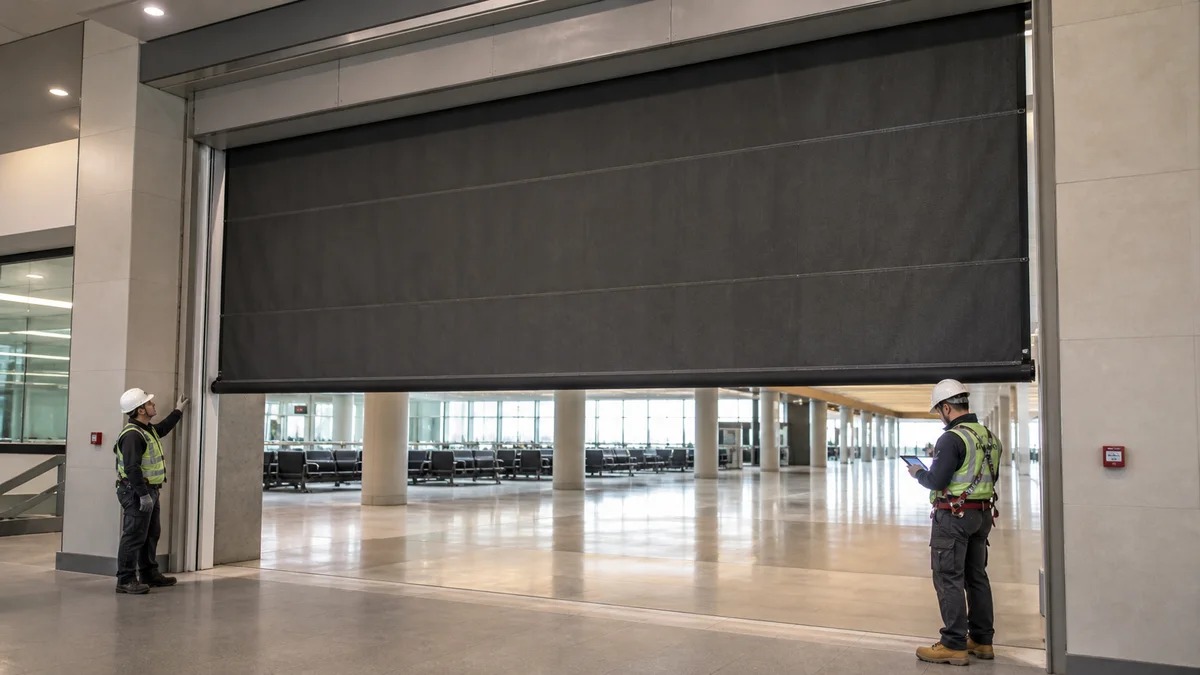
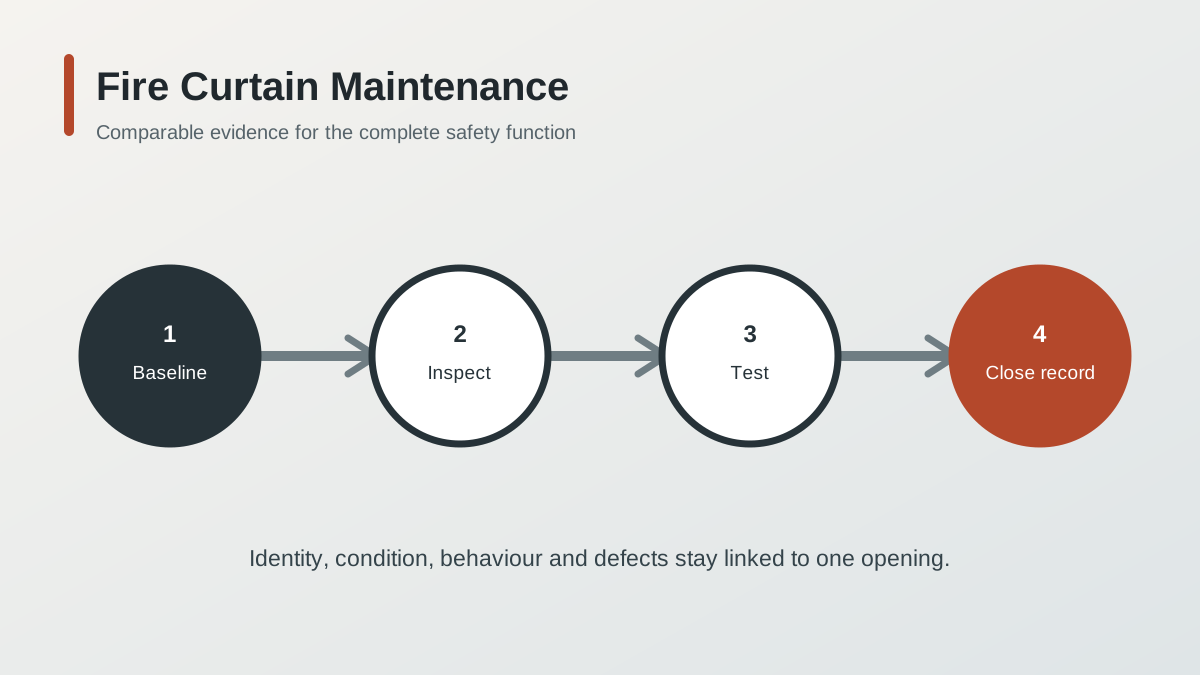
The protected opening is the useful maintenance unit, not the motor, fabric or control panel in isolation. Give every curtain a stable asset identifier and connect that identifier to the opening schedule, approved fire strategy, product evidence, as-built detail, cause-and-effect, commissioning result and service history.
A routine movement check can reveal an obvious obstruction, but it cannot by itself confirm that the supporting construction, side guides, bottom bar, control interface, power behaviour and fire-alarm input still match the accepted arrangement. The inspection scope should follow the whole safety function from initiating signal to final position, feedback and reset.
Keep operational observation distinct from competent servicing. Facilities staff can report damage, obstruction or an unexpected status indication; intrusive work, adjustment and formal servicing should follow the manufacturer’s instructions and the applicable competence and approval arrangements.
Build a baseline before setting the maintenance plan
Start with a verified asset register. Record location, curtain type, opening dimensions, protected objective, required classification, head-box and guide arrangement, supporting construction, control equipment, power supplies, interfaces and access method. If that baseline is missing, the first competent survey should identify the gaps rather than inventing certainty.
Compare the installed assembly with the current as-built information. Ceiling alterations, signs, lighting, services, partitions, access panels and tenant fit-out can change the deployment path or hide a component without appearing in the maintenance log. Photograph the opening from consistent viewpoints so later inspections can distinguish a new condition from a longstanding detail.
Set the inspection and service frequency from the adopted rules, product instructions, fire-risk assessment, building use, operating environment, previous faults and the consequences of failure. A busy public opening, dusty production space or frequently changing retail fit-out can justify controls beyond a generic calendar entry.
Keep nine inspection records for every fire curtain
Records 1–3 cover identity, condition and access. Confirm the asset reference and approved baseline; record the visible condition of the fabric, seams, bottom bar, head box and guides; then verify that inspection panels, working space and the full deployment path remain accessible and unobstructed.
Records 4–6 cover movement, initiation and power. Capture the observed travel and final position; identify the exact initiating input used for the test; and record the behaviour for the power conditions that the approved cause-and-effect requires. Do not assume that every system uses the same fail-safe, delay or staged-descent logic.
Records 7–9 cover feedback, defects and release. Check the required status or fault indications, link every defect to an owner and target date, and retain the competent person’s completion evidence before returning the asset to normal service. A signed sheet with unresolved exceptions is not a closed maintenance record.
Separate observation, functional testing and integrated testing
Visual inspection asks whether anything is damaged, altered, inaccessible or obstructed. A local functional test asks whether the identified curtain completes the commanded movement and reset sequence. An integrated test asks whether the fire-detection input, interface devices, curtain controls, other connected measures, feedback and operating response deliver the approved building scenario.
These layers should not be collapsed into one tick box. The frequency and witness route can differ, and a safe integrated test may require the alarm contractor, curtain specialist, building operator and other system owners to coordinate isolations, notifications and restoration.
Before testing, assess the effect of curtain movement on occupants, escape and normal operations. Control the opening, communicate with affected teams and confirm how the system will be restored. After testing, verify normal indications and remove temporary isolations; the maintenance record should show who checked restoration.
Coordinate alarm, power and building interfaces
The curtain cannot be maintained responsibly without the current cause-and-effect. Record the initiating zone or signal, interface path, any approved delay or intermediate position, final position, monitoring, manual controls, reset authority and response to relevant power failures. If the documentation and observed behaviour disagree, treat the difference as a design query or defect, not a harmless local preference.
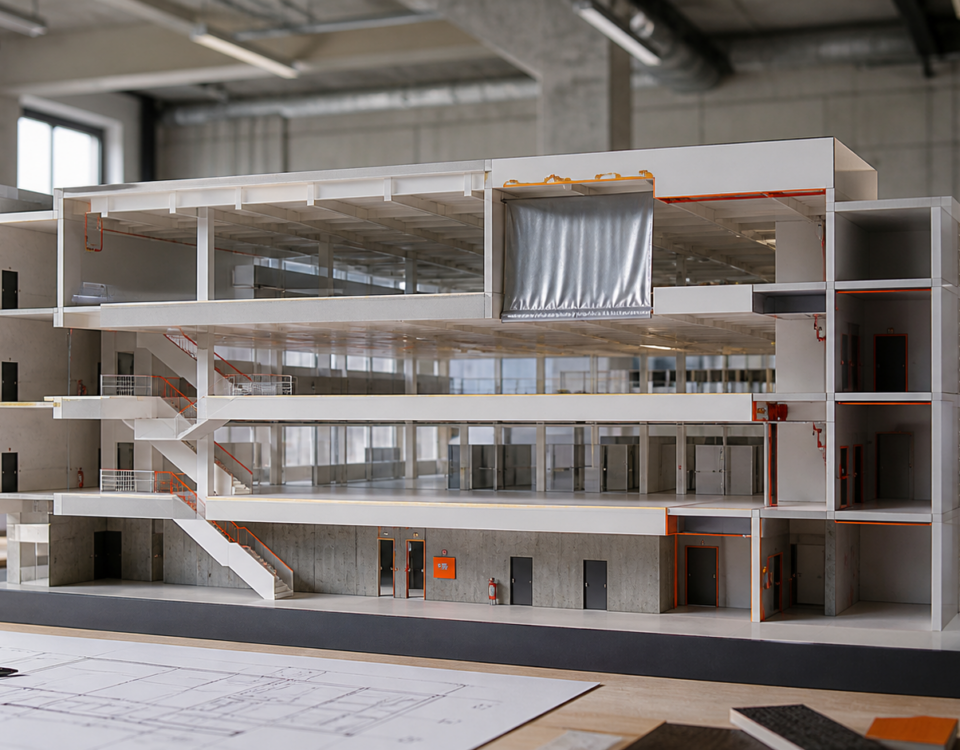
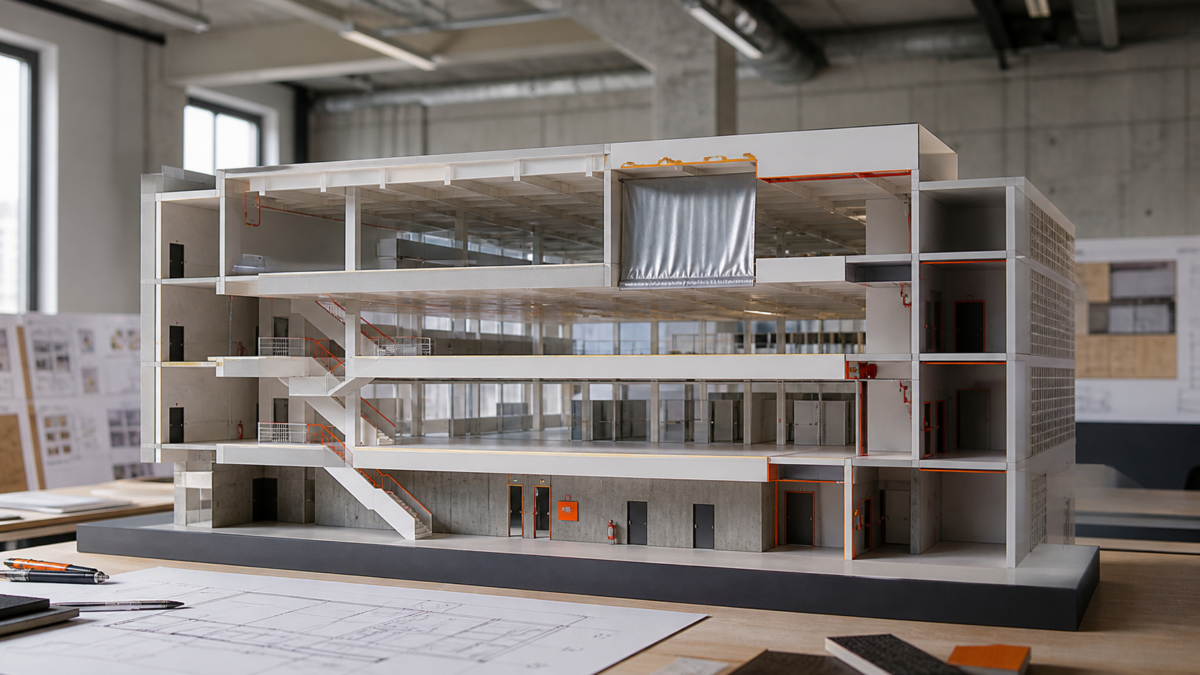
Use the related fire curtain system information to structure product questions, then check the opening against the wider fire-compartmentation continuity and active-versus-passive protection strategy. These pages support coordination; the project’s approved documents control the final requirement.
Maintenance should also reveal dependencies outside the curtain package: detection, power supplies, fire-alarm interfaces, ventilation, lifts, access control or other ancillary measures. Assign each interface to a named system owner so a curtain contractor is not expected to certify equipment outside their competence.
Control defects and building changes until they are closed
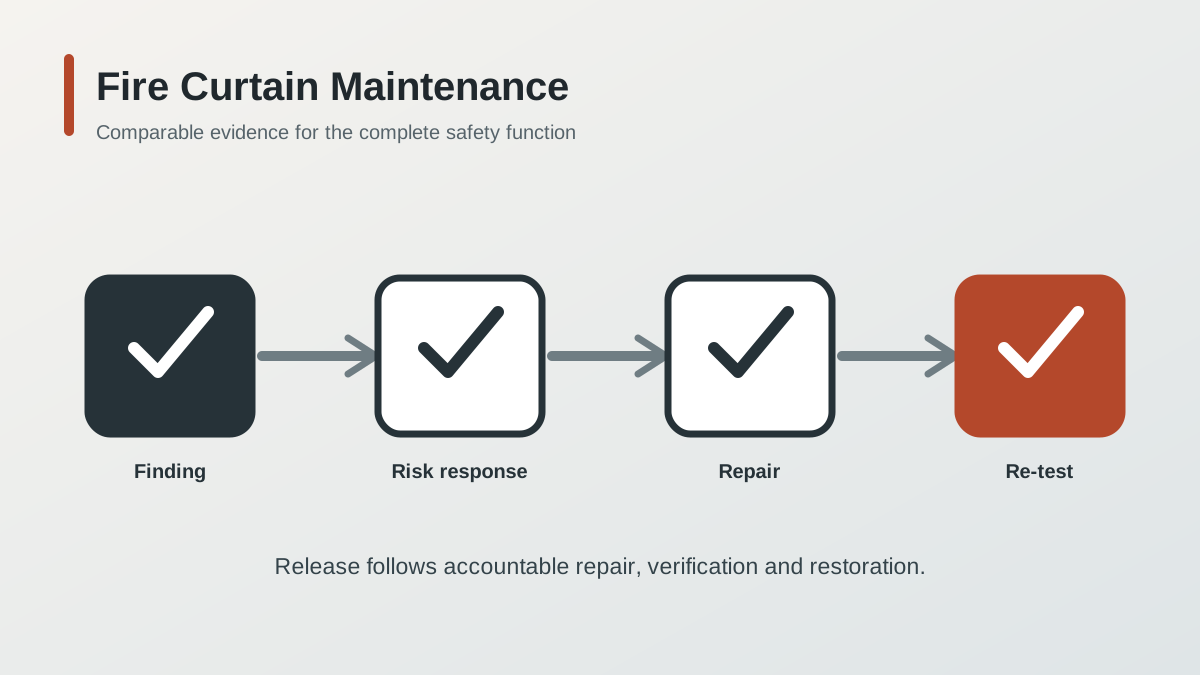
Classify a defect by its effect on the protected function, not by how small it looks. A damaged edge, contaminated guide, missing access panel, altered ceiling or intermittent feedback signal can require different immediate controls, specialist review and repair priorities. Record any interim risk measure and who authorised it.
Re-test the affected function after repair and retain before-and-after evidence. Replacing a component with a superficially similar item can change the evidence basis; confirm compatibility with the documented assembly and follow the applicable approval route before treating the repair as complete.
Bring fire curtains into the building change-control process. New signage, furniture, service routes, partitions and access arrangements should be reviewed before work starts. The maintenance team then checks the latest approved condition rather than repeatedly discovering the same fit-out conflict after completion.
The Minimum Maintenance Record Pack
For each asset, retain the opening identifier, accepted baseline, current drawings, relevant product information, risk-based maintenance plan, inspection and test results, interface observations, photographs, defects, interim controls, repair evidence, restoration check and next action. Keep revisions traceable so the operator can show what changed and why the asset was released.
Make the Next Inspection Comparable, Not Merely Repeatable
Use the same asset reference, viewpoints, test input and result fields on the next visit, while allowing the competent team to expand the scope when risk or change demands it. Review the IMFire product range, share the records through the technical enquiry route, and ask for assembly-specific information before planning intrusive work.
Fire Curtain Maintenance Record Checklist
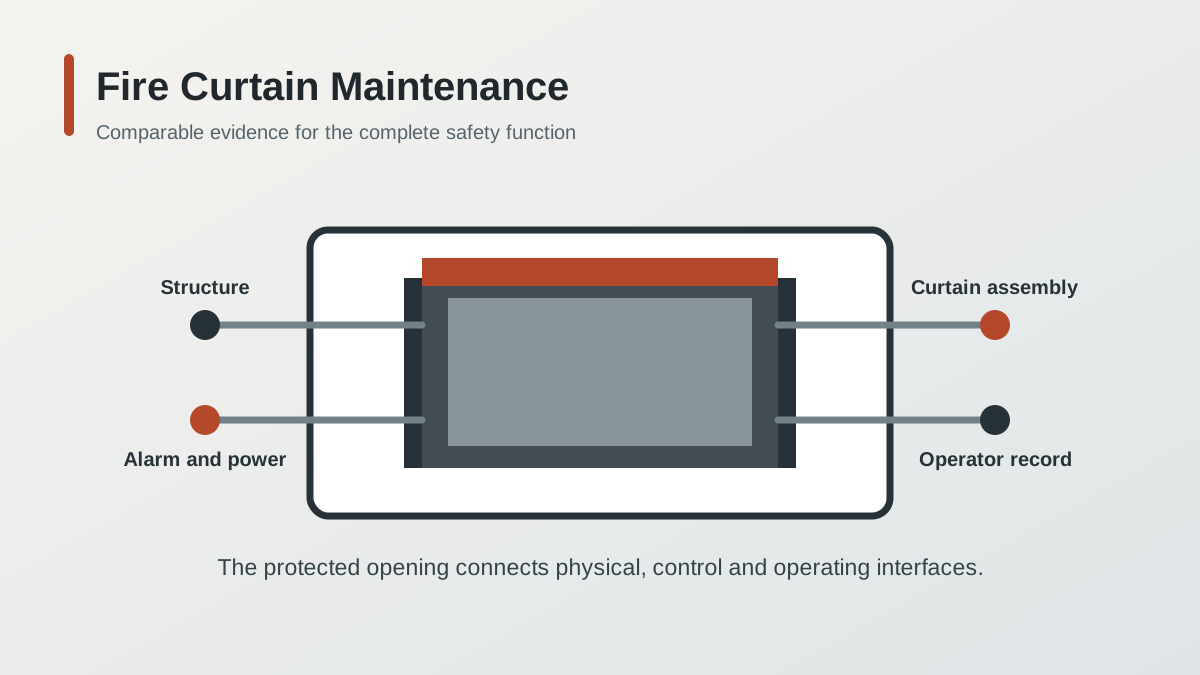
- Confirm the curtain identifier, protected opening and current approved baseline.
- Inspect fabric, seams, bottom bar, head box, guides, fixings and visible support conditions.
- Verify access panels, working space and the complete deployment path.
- Record the precise initiating signal, observed movement, final position and reset.
- Check the approved power-loss behaviour without assuming a universal sequence.
- Capture required status and fault indications at the agreed monitoring points.
- Assign every exception to an owner, priority, interim control and target date.
- Re-test repaired functions and record full restoration to normal operation.
- Review building changes and issue the next risk-based inspection action.
Fire Curtain Maintenance Traps
Calling one movement a complete service
Movement is evidence for one part of the function. It does not close condition, interface, power, feedback, obstruction, documentation or defect questions.
Copying a universal interval from another building
The adopted requirements, manufacturer instructions, fire strategy, risk, environment and fault history must shape the local plan.
Closing the visit with open exceptions
Every exception needs an owner, risk response, repair route and verification result; otherwise the record describes a known uncertainty rather than readiness.
Current References for Fire Curtain Maintenance
Check the edition adopted by the project and obtain the complete documents needed for the specific assembly. The references below define relevant scopes but do not replace the building’s approved fire strategy or manufacturer information.
- BSI — BS 8524-2:2025 application, installation and maintenance
- BSI — BS 8524 active fire curtain barrier series
- UK Government — maintenance of fire safety measures
This article is general technical guidance, not a maintenance specification or project approval. Use the current adopted requirements, approved fire strategy, complete product documentation, risk assessment and competent service provider to define intervals, methods and acceptance criteria.
Frequently Asked Questions
How often should a fire curtain be serviced?
There is no safe universal answer for every building. Use the adopted requirements, manufacturer instructions, approved fire strategy, risk assessment, environment, usage and fault history to set and review the interval.
Is a successful drop test enough?
No. It demonstrates only part of the function. Condition, access, guides, controls, initiating signals, power behaviour, indications, reset, interfaces and restoration also need the appropriate level of inspection or testing.
Who should maintain an active fire curtain?
Routine observations may be allocated to trained site staff, but specialist inspection, adjustment and servicing should be performed by competent people working to the applicable product and project information.
What should happen after a defect is found?
Record its effect, assign ownership, decide any interim risk measure, repair through the approved route, re-test the affected function and retain evidence that normal service was restored.
Send the opening schedule, drawings, required classification and control cause-and-effect. IMFire can review the curtain interface and prepare a project-specific proposal.