Fire Safety Standards: An EN, NFPA and ISO Guide
22 July 2026
Fire Safety Project Planning Before Procurement
26 July 2026
- A Risk Assessment Is More Than an Equipment Count
- Prioritise Interface Failures
- Use Scenarios to Set Priorities
- Write a finding that someone can act on
- Turn Findings into Owned, Verifiable Actions
- Use records to guide the survey, then check the building
- An action list is useful only while it stays current
- Official risk-assessment guidance
- Frequently Asked Questions
The most dangerous defect is often not a missing device but a broken interface between devices that appear healthy in isolation.
This guide frames risk around people, scenarios and protection layers, with special attention to curtain obstructions and smoke-control coordination.
A Risk Assessment Is More Than an Equipment Count
A credible fire-risk assessment considers ignition sources, fuel, occupants, building layout, work processes and the condition of protection measures. Counting extinguishers or checking an alarm panel does not explain how smoke could move through an atrium, whether a compartment opening is protected or whether a deployed curtain would conflict with an escape route.
The assessment should identify credible scenarios and the people or assets exposed. It can then evaluate prevention, detection, evacuation, suppression, compartmentation and smoke control as layers. Findings should describe the observed condition, the consequence, existing safeguards, recommended action, owner and priority rather than using an unexplained numerical score.
Prioritise Interface Failures
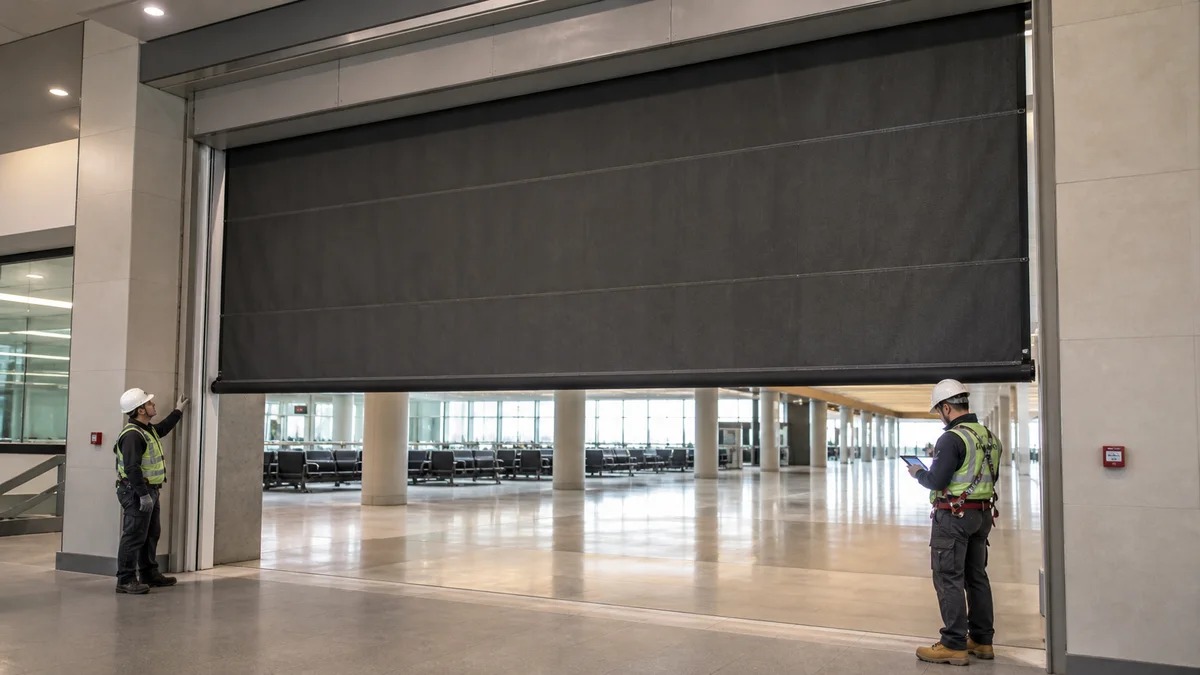
Complex buildings often fail at interfaces: a curtain is obstructed by a later fit-out, a fire door is held open, a fan runs without the intended make-up air, or an alarm output no longer reaches the correct control panel. Scenario-based inspections expose these weaknesses more effectively than isolated visual checks.
Actions should be proportionate and traceable. Immediate life-safety defects need prompt control; design questions may require the appointed fire engineer; product concerns may require the manufacturer’s evidence; and changes to an approved strategy may require authority review. The assessment itself should not be presented as design approval.
Use Scenarios to Set Priorities
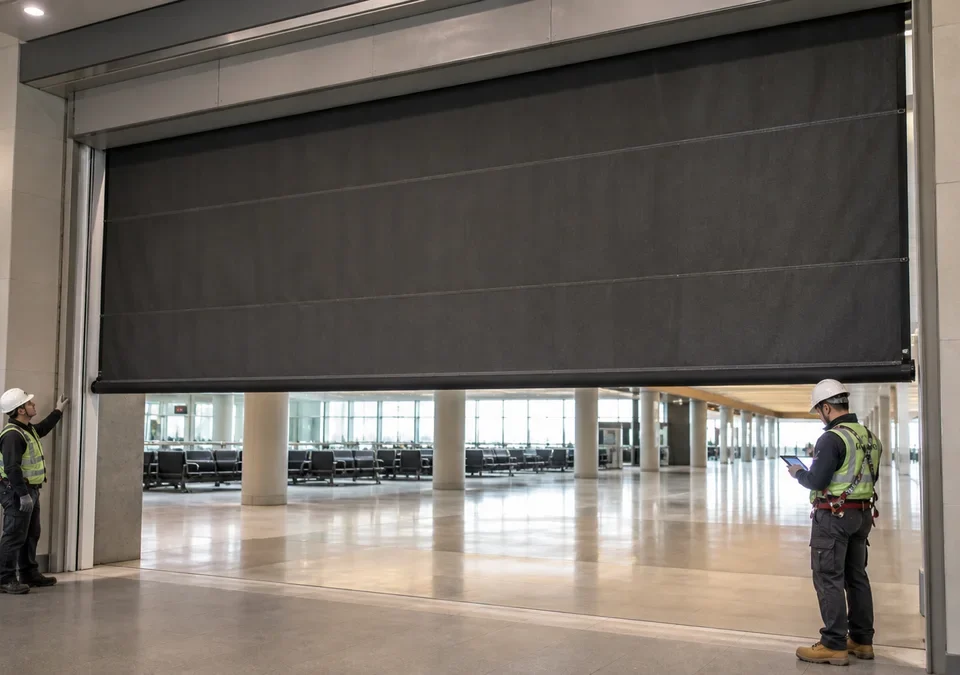
Consider a mall atrium where a deployable smoke curtain is blocked by a promotional sign. The immediate issue is not cosmetic: smoke may cross the intended reservoir boundary and reduce the effectiveness of extraction. The assessment should identify the obstruction, affected scenario, temporary control, responsible team and verification action after removal.
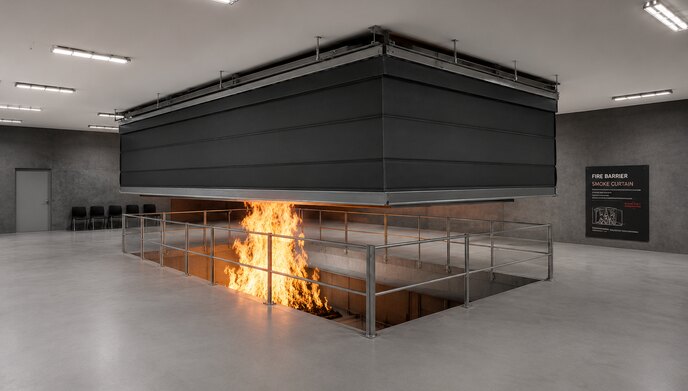
In an industrial building, a fire curtain may appear operational during a local push-button test but fail to receive the alarm signal intended by the cause-and-effect matrix. That is an interface defect. A scenario test involving the initiating device, panel, curtain controller and final-position feedback provides stronger evidence than isolated movement.
Risk ratings should support decisions, not hide them. Explain why likelihood and consequence were assigned, distinguish observed facts from assumptions and state where specialist design review is required. Reassessment should follow significant layout, occupancy, process or fire-strategy changes, as well as completion of major remedial work.
Write a finding that someone can act on
A useful finding starts with a location and an observation. For example: “The advertising panel at atrium zone A crosses the marked travel line of curtain SC-04.” That is more actionable than “smoke control inadequate.” Attach a photograph, identify the approved arrangement used for comparison and record anything that could not be checked. Keep the observed obstruction separate from the engineering consequence that still needs confirmation.
Next, state who is exposed and when. A condition affecting a public escape route during trading hours differs from damage inside an isolated maintenance area, although both require assessment. The assessor should connect the priority to the actual people, scenario and existing safeguards. An unexplained red score cannot tell the operator what to do next.
Assign immediate control and permanent resolution separately where appropriate. Removing a movable sign might resolve an obstruction, while a fixed ceiling conflict could require design work. Record who authorised any temporary arrangement and how completion will be verified. These are example reporting fields, not a universal risk-rating method or permission to continue operating with an unresolved life-safety defect.

Turn Findings into Owned, Verifiable Actions
Every finding should name the condition, consequence, interim control, responsible owner, target date and verification method. Design or compliance decisions should be referred to the appointed competent parties.
Use records to guide the survey, then check the building
Begin with the current fire strategy, previous assessment, layout drawings, known impairments and maintenance history. Ask the operator what changed since the last review: occupancy, opening hours, storage, events, machinery or staff arrangements. Repeated faults and overdue actions help identify where the survey needs particular attention.
Then compare those records with the spaces people actually use. A drawing can show a clear route while deliveries or furniture occupy it each morning. A service record can report a curtain movement test without confirming that the building alarm initiated it. State the limits of the inspection and arrange competent investigation where the evidence does not answer the question.
The curtain maintenance guide helps distinguish those test records. For concealed construction, the compartmentation review explains why a visible finish alone cannot establish the full boundary condition.

An action list is useful only while it stays current
A finding marked complete should point to a result: an inspected repair, an updated design decision or an appropriately witnessed test. An invoice shows that work was charged for, but it does not establish what condition was corrected. Keep the completion evidence with the original location reference so the next assessor can follow the change.
Watch for repeated low-level descriptions of the same underlying issue. Several obstructed curtain paths across a mall may indicate a gap in tenant approval, not merely unrelated housekeeping failures. Correcting the individual obstructions and the approval process addresses both the immediate condition and its recurrence.
Review the assessment when a significant change makes its assumptions unreliable. A new night shift, altered storage arrangement or public event can change the people and conditions considered. The appointed competent assessor should determine the necessary scope; a supplier visit for one product is not a substitute for that wider review.
Official risk-assessment guidance
The UK Government fire risk assessment guidance describes the assessment process and the need for competent help where the task exceeds the assessor’s expertise. Apply the law and assessment requirements of the project jurisdiction; this article is a reporting and coordination guide, not a site assessment.
Frequently Asked Questions
What makes a fire risk finding useful?
It identifies the observed condition, location, affected people or scenario, priority, responsible person and verification action. It also states any limits or assumptions requiring further investigation.
Can a maintenance certificate replace a fire risk assessment?
No. Maintenance evidence addresses particular equipment or work. A fire risk assessment considers the premises, activities, people and the way protection measures work together.
Should a photograph be enough to close a defect?
A photograph can establish some visible corrections. Other defects need inspection, engineering review or a functional test. Choose evidence that demonstrates the actual correction.
When should an existing assessment be reviewed?
Review it when significant changes, new findings or remedial work affect its assumptions, as well as under the applicable local requirements and planned review arrangements.
Share the asset reference, photographs and the specific finding. IMFire can help with product information relevant to the observed curtain issue.