Fire Risk Assessment for Complex Buildings
24 July 2026
- EN, NFPA and ISO Are Not Interchangeable Labels
- Check Edition, Scope and Evidence
- Build an Evidence Route, Not an Acronym List
- Separate product evidence from system design
- Create a Project Standards Matrix
- Resolve editions and conflicts before ordering
- Read the document title before trusting the acronym
- Official References and Currency Note
- Frequently Asked Questions
Combining EN, NFPA and ISO references in one paragraph can create more ambiguity, not more safety.
This guide shows how to establish a code hierarchy, verify current editions and connect product evidence to the actual curtain application.
EN, NFPA and ISO Are Not Interchangeable Labels
International projects may reference European EN standards, NFPA codes and standards, ISO publications, national regulations and authority-specific requirements. These documents can address different parts of the problem: product testing, classification, system design, installation, inspection or integrated testing. Listing several acronyms in a specification does not create a coherent compliance route.
The project should state the jurisdiction, adopted building and fire codes, authority requirements and contract standard hierarchy. Product evidence must then be checked against the exact application. For smoke barriers, BS EN 12101-1 is a recognised European specification. NFPA 92 addresses smoke-control system design topics, while ISO committees publish a wider family of smoke and heat control standards.
Check Edition, Scope and Evidence
Standards are revised. A document number without an edition or adoption status can leave bidders interpreting different requirements. The specification should identify the applicable edition where the contract demands it, while the design team confirms whether national adoption, amendments or authority rules modify that reference.
Evidence review should identify the tested assembly, classification, dimensions, installation arrangement, permitted field of application and issuing body. A certificate logo or catalogue statement is not enough to show that a specific curtain configuration satisfies a project requirement.
Build an Evidence Route, Not an Acronym List
For each requirement, identify the controlling source. A national regulation may establish the legal objective; a fire strategy may define the performance needed at a particular opening; a product standard may describe test and classification methods; an installation code may guide application; and an integrated-testing standard may address system interfaces. These documents should form a traceable route rather than a decorative list.
International tenders should also separate “equivalent” from “identical.” Evidence issued under another standard family may be technically valuable, but equivalence is a project and authority decision. Suppliers should not be asked to self-declare that two classification systems mean the same thing without an agreed assessment route.
Create a standards register and review it at design freeze, tender clarification and submittal approval. Record revisions and authority comments. When a standard changes during a long project, the contract team can then decide which edition governs and whether the technical change affects the design, evidence or commissioning plan.
Separate product evidence from system design
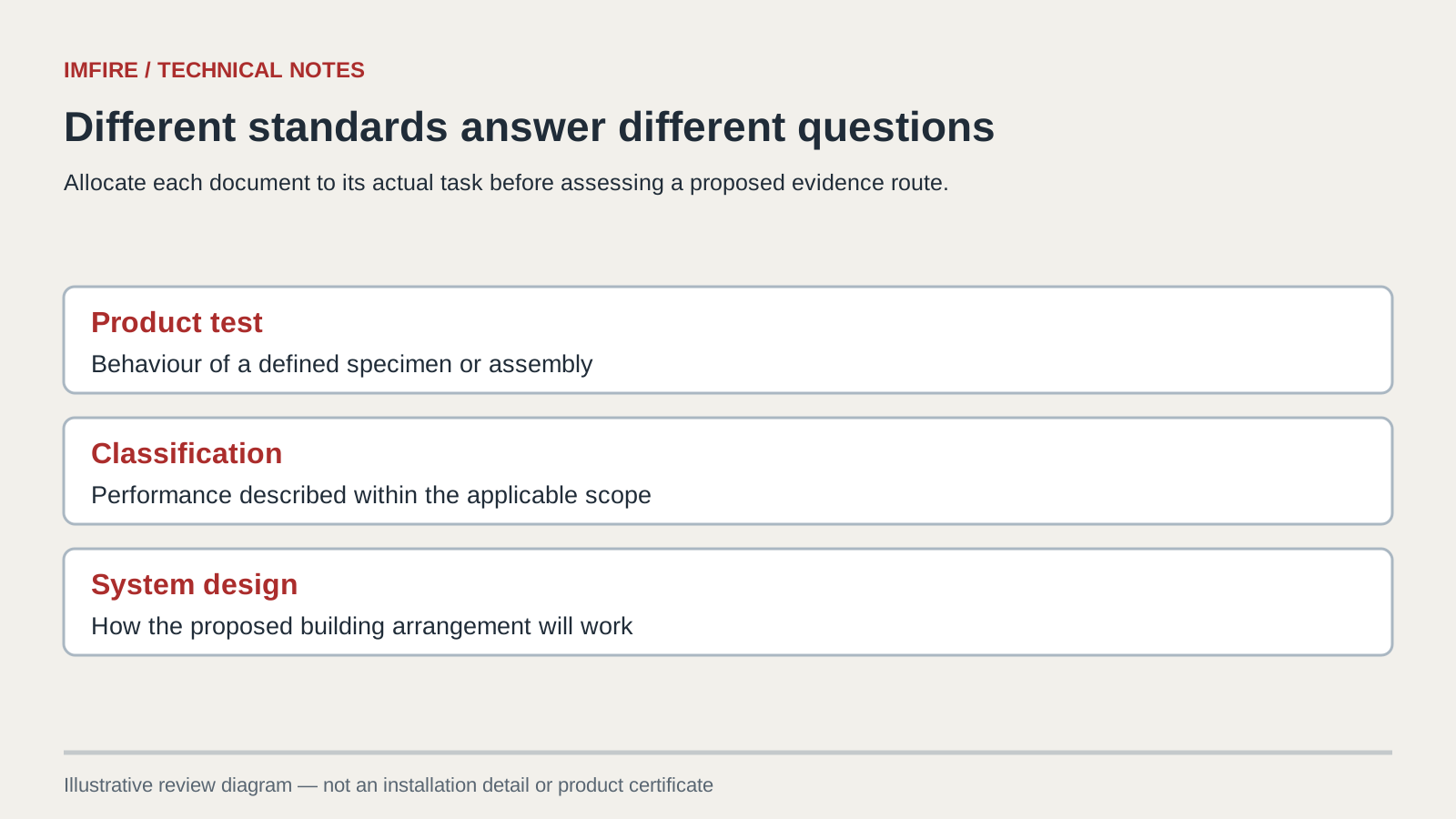
A product test and a smoke-control design calculation serve different purposes. The former provides evidence about a defined specimen or assembly under stated conditions. The latter addresses how a particular building arrangement is intended to behave. A product can have relevant test evidence while still being unsuitable for a proposed location or being placed incorrectly within the building design.
Take a tender that asks for a smoke barrier to comply with EN 12101-1 and for the smoke-control system to follow NFPA 92. Those references should be allocated to their respective tasks, with the project team resolving how they fit the adopted approval route. They should not be merged into a statement that one document certifies compliance with the other. The same care applies when an ISO publication is included: identify the specific document and the question it answers.
Ask for a requirement-to-evidence table. One row should identify one requirement, its source, the proposed supporting document and the reviewer decision. If a bidder proposes a different standard family, ask what differs in scope, testing or classification and who will assess the proposed route. Calling it “internationally certified” leaves those comparisons unanswered.
Create a Project Standards Matrix
Record each document’s purpose, edition, contractual status, responsible reviewer and affected package. Resolve conflicts before tender rather than asking suppliers to guess the intended hierarchy.

Resolve editions and conflicts before ordering
Record both the publication edition and the edition adopted for the project. A standards organisation can publish a revision before a local code or contract changes its reference. Conversely, a familiar old document may no longer be the appropriate basis for a new tender. The design team should resolve the applicable edition and any amendments instead of leaving different bidders to choose.
Where two specification clauses conflict, raise a focused query with both clauses and the affected location. Do not silently select the more convenient one. A reply should identify the controlling requirement and be issued to everyone pricing or detailing that work.
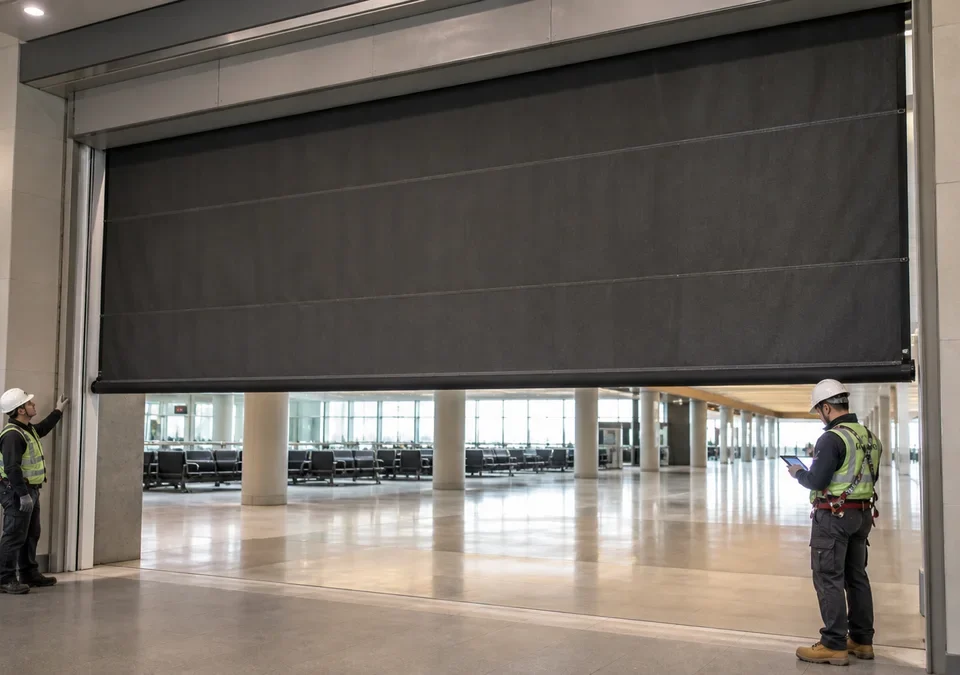
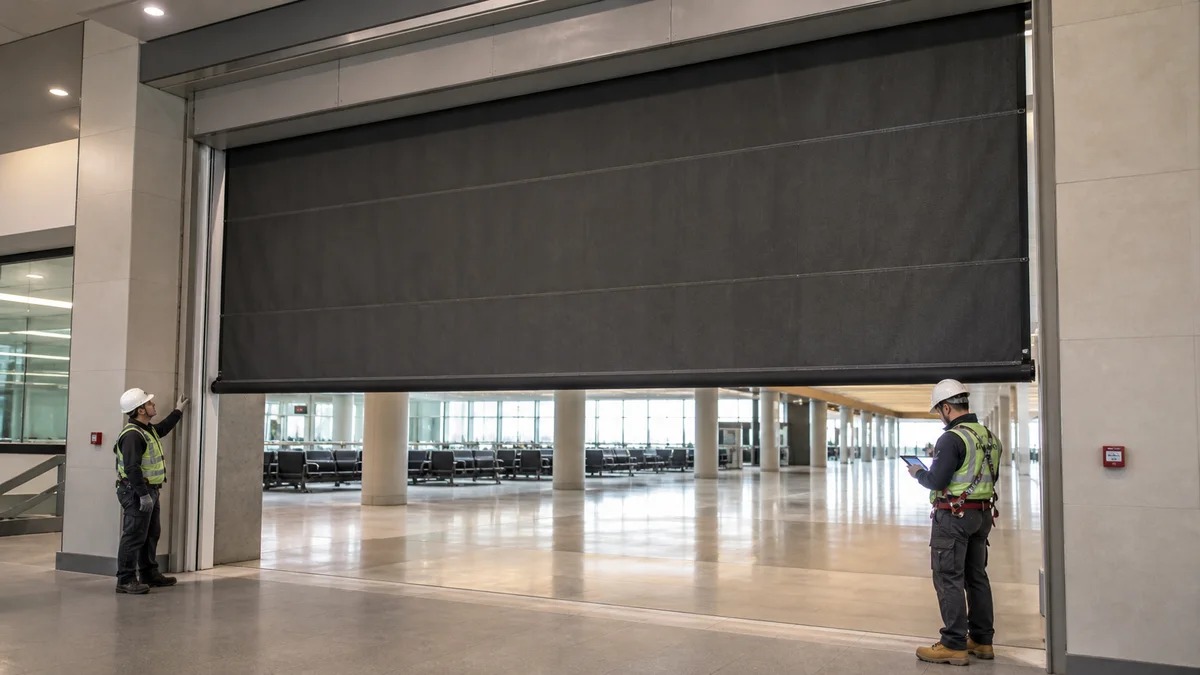
For the physical application, compare the evidence with the proposed curtain assembly and the wide-opening detail. This keeps document review connected to the product and geometry that will actually be supplied.

Read the document title before trusting the acronym
ISO management-system certification and product performance evidence are not the same thing. A company certificate can concern its management processes without proving a particular curtain classification. Ask what the document covers and how it supports the specific technical requirement being reviewed.
Likewise, a test report should not be described as unrestricted approval. Read the identified specimen, configuration and applicable limitations. A classification or assessment may provide additional information, but the relationship between documents needs to be clear. If a document belongs to a different model or component, do not assume the shared brand name closes the gap.
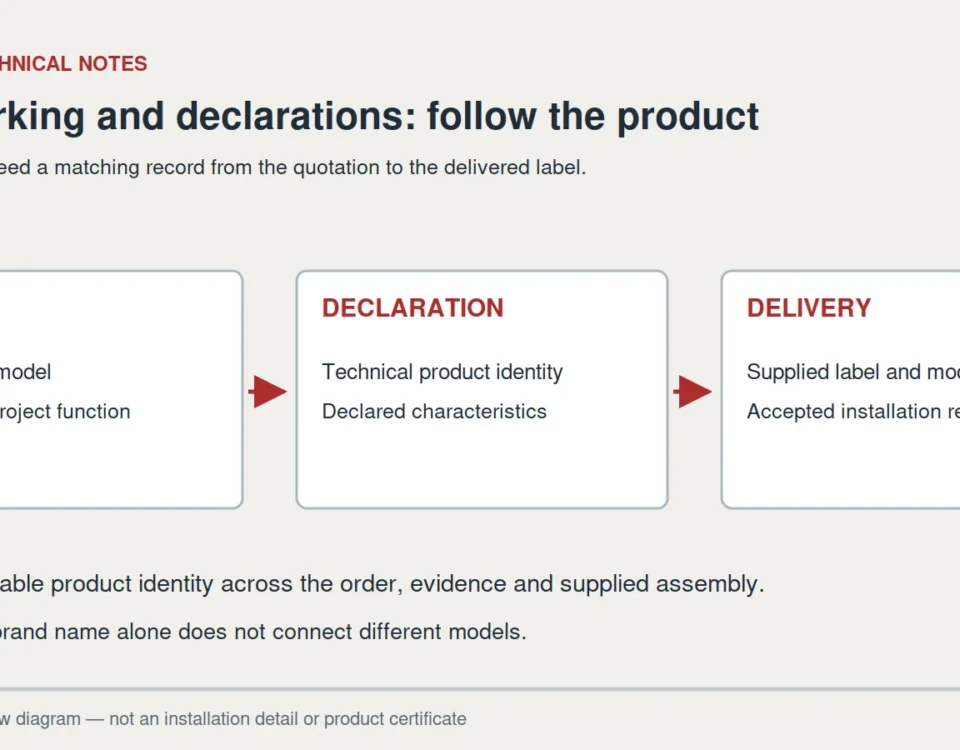
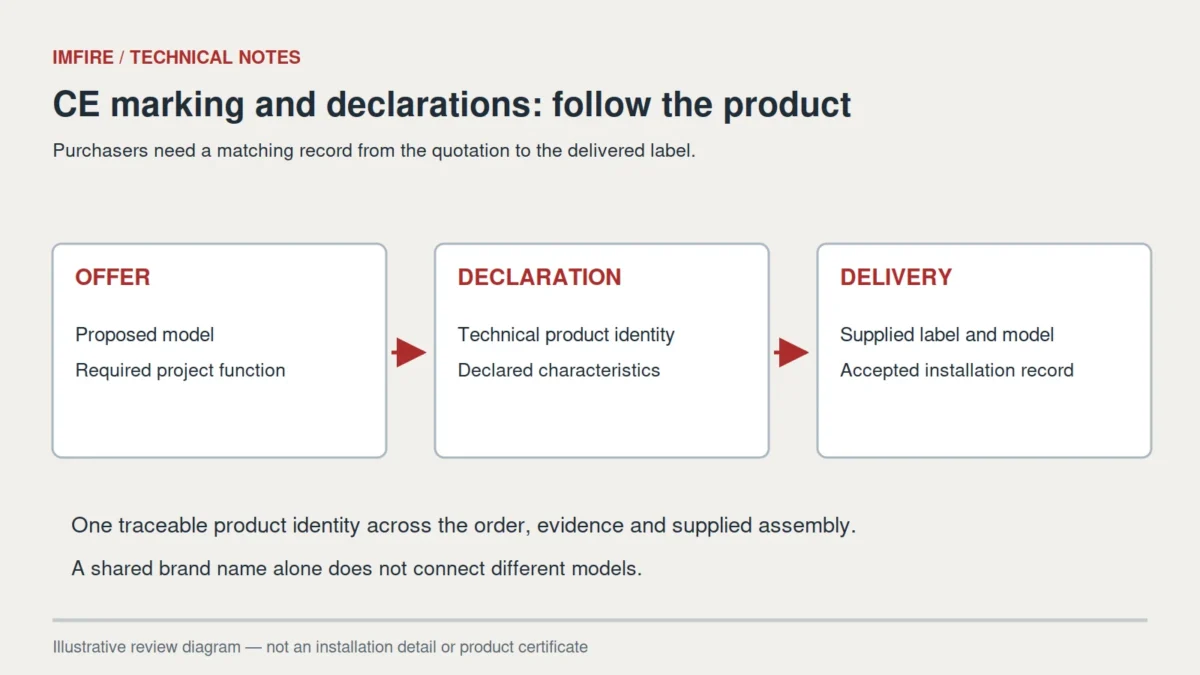
Keep the standards register concise enough to use. A short list with a purpose, edition and responsible reviewer for each entry is more valuable than several pages of unassigned references. Product marking and declarations are a separate procurement check; they should be matched to this technical route without being treated as a replacement for it.
Official References and Currency Note
A catalogue statement is not a project approval. Confirm the adopted code, the current standard edition, the approved fire strategy and the exact scope of the product evidence.
- BSI — BS EN 12101-1 smoke barriers
- NFPA — NFPA 92 Smoke Control Systems
- ISO — Smoke and heat control committee
This article is general technical guidance, not a project-specific compliance decision. The authority having jurisdiction, appointed fire engineer, approved fire strategy and current product evidence govern the final design.
Frequently Asked Questions
Are EN, NFPA and ISO fire standards interchangeable?
No. Identify each document’s scope and the project’s adopted route. Similar subject matter does not establish identical tests, classifications or acceptance requirements.
Should a specification always use the newest edition?
The project team must confirm the edition required by the adopted code, authority and contract, and address revisions or amendments. Publication date alone does not settle that question.
Does ISO certification prove a curtain fire rating?
A management-system certificate does not establish a product fire classification. Check the exact document scope and the assembly-specific performance evidence.
What belongs in a standards register?
Record the document number and edition, its purpose, adoption or contractual basis, affected package, responsible reviewer and any resolved conflicts or approved alternatives.
Send the relevant specification clauses, project jurisdiction and proposed opening arrangement for a technical enquiry.